This article describes the process of an arbitration hearing.
In previous articles, I covered the filing of a labor arbitration case, failed mediation, and evidence exchange. This article will review my arbitration hearing process. Before starting, let me recap the timeline of previous steps:
- March 2, 2021: Filed the case
- March 25, 2021: Received an email notification containing the evidence exchange date and hearing date.
- May 10, 2021: Submitted evidence.
- May 21, 2021: Collected the company's evidence.
Based on this timeline, do you think it was fast or slow? If you've ever experienced a layoff, searched for labor arbitration information, or heard about it from others, you've probably seen or heard that "arbitration is troublesome" and "arbitration takes a long time." In reality, that's true.
My hearing was scheduled for May 24, 2021. The time and place were agreed upon in advance. The email at that time was roughly as follows:
Zhang San, for case number 123456, the evidence submission period is from 9:30 AM on May 10, 2021 (please read carefully the evidence submission notice you received when filing the case). Please arrive on time at Window 9, Building B, Floor xx for evidence submission and exchange. Contact number: 010-1234567. If you fail to submit evidence within the designated time, any evidence sent by mail or courier will be considered invalid. The hearing will be held at 10:30 AM on May 24, 2021, in the 23rd Arbitration Tribunal of this commission. The arbitrator is zm, contact number: 010-1234567. The rights and obligations regarding evidence submission and the hearing are based on the written notice you received when submitting your application. Please come on time for evidence exchange and the hearing as scheduled; failure to do so will result in adverse consequences.
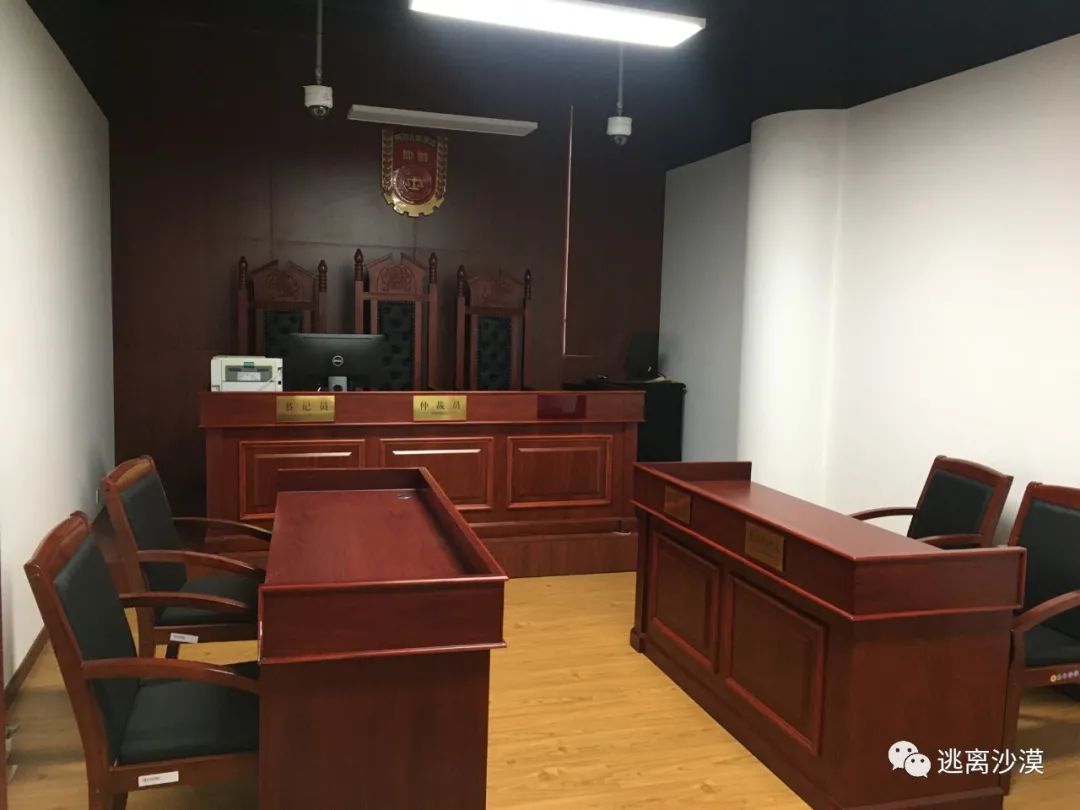
On the morning of May 24, 2021, I arrived at the Beijing Chaoyang District Labor Arbitration Court. After reaching the designated floor, I saw many small rooms, each serving as a "mini courtroom." They looked roughly like this:

I found the "mini courtroom" for my hearing. I arrived at 9:40 AM, and the door was closed, showing "Hearing in Progress." There was likely another case going on inside. After a while, the door opened, and a staff member in uniform came out, followed by a woman in ordinary clothes (likely a party to the labor dispute). They went into a nearby meeting room for a "private talk."
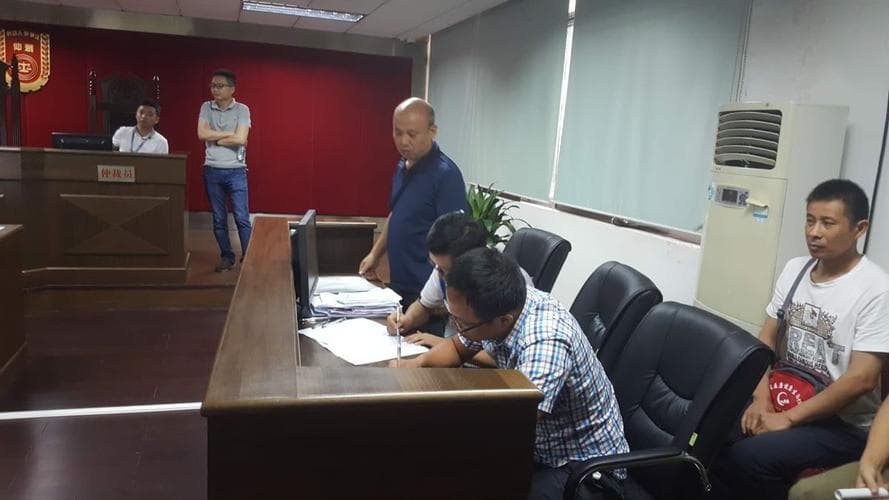
My hearing was scheduled for 10:30 AM. At around 10:32 AM, the staff member let me in. After both parties took their seats, the judge asked if we needed to request recusal and whether we were willing to mediate. The company said they were willing to mediate and pay x yuan, equivalent to one month's salary. The judge asked me if I accepted. I said no. Then the staff member asked both parties whether they recognized each other's evidence and the purpose of the evidence, and whether there was anything to add. It ended before 11:00 AM. During my answers, the staff member even interrupted me. Overall, I barely got to speak, and they didn't ask me for detailed information. It was nothing like I imagined. Then the staff member came out and called me to follow her. We went to an empty meeting room for a "private talk," just like the scene I saw when I first arrived.
In the meeting room, the staff member asked me, "Are you willing to compromise and make concessions? The amount you're asking for (2N) is definitely not going to be granted. The company is unwilling to pay it. If you're willing to compromise, I'll go talk to the company about mediation." I asked, "What if I don't agree to mediation?" She said, "If you don't agree, you'll have to wait for the ruling." I asked how long it would take, and she said about two months, and then the first and second trials could drag on for another three years. While I was thinking about it, she pressed me again: "So, what do you think? If you're willing to make concessions, I'll negotiate with the company. If you ask for this much, they definitely won't give it to you. If you can mediate, then mediate. If you fight the company through first and second trials, they'll drag it out for three years, and in the end, the company will still pay you the same amount. The company is definitely willing to drag it out with you. So, what do you think?"
Hearing those words, I felt helpless and didn't know what to say. Faced with the possibility of being "dragged out for two to three years," I felt it might not be "worth it," but deep down, I still thought: I don't want to be "violated" by the company. And the HR's words from back then echoed in my mind: "I just won't give you that much compensation. What can you do? Go ahead and file for arbitration!"
I was still deliberating, and the arbitration court was waiting for my response. Why is this so? Why is it so hard for me to do what is right? They looked at me as if I were a "stubborn old man unwilling to compromise." And those colleagues who were also laid off, who had initially agreed to file arbitration together but later backed out and left me, would think: "Why are you so stubborn? Why are you so insistent?" Forget it, forget it—no matter what others think, I can't swallow this anger! I've already come this far; why compromise now? Several months have already passed, so let it continue! I said: "I don't want to make concessions. I still want 2N." The staff member said, "Then wait for the ruling."
And just like that, the hearing ended. It was completely different from what I had imagined. Did you notice? At this point in my labor arbitration, what was the core approach? Mediation—the staff member kept pushing for mediation. Actually, it's not hard to understand: if mediation is successful, it's a "win-win for everyone."
However, what is the actual situation? What should participants choose? You have to make your own judgment, you know?
The hearing ended, and the next step was the "ruling." The hearing was on May 24. How long do you think it took me to receive the ruling?
Preview of the next article: Waiting for the ruling and what happened during that time.