
下面将介绍如何通过 LiteDB 将自己的程序进行加密,实现介绍一下 LiteDB。
LiteDB
LiteDB 是一个轻量级的嵌入式数据库,它是用 C#编写的,适用于.NET 平台。它的设计目标是提供一个简单易用的数据库解决方案,可以在各种应用程序中使用。
LiteDB 使用单个文件作为数据库存储,这个文件可以在磁盘上或内存中。它支持文档存储模型,类似于 NoSQL 数据库,每个文档都是一个 JSON 格式的对象。这意味着你可以存储和检索任意类型的数据,而不需要预定义模式。
LiteDB 提供了一组简单的 API 来执行各种数据库操作,包括插入、更新、删除和查询。它还支持事务,可以确保数据的一致性和完整性。
LiteDB 还提供了一些高级功能,如索引、全文搜索和文件存储。索引可以加快查询的速度,全文搜索可以在文本数据中进行关键字搜索,文件存储可以将文件直接存储在数据库中。
LiteDB 的优点包括易于使用、轻量级、快速和可嵌入性。它的代码库非常小,可以很容易地集成到你的应用程序中。此外,它还具有跨平台的能力,可以在 Windows、Linux 和 Mac 等操作系统上运行。
总之,LiteDB 是一个简单易用的嵌入式数据库,适用于各种应用程序。它提供了一组简单的 API 来执行数据库操作,并支持一些高级功能。如果你需要一个轻量级的数据库解决方案,可以考虑使用 LiteDB。
加密封装
创建LiteDB.Service的 WebApi 项目。
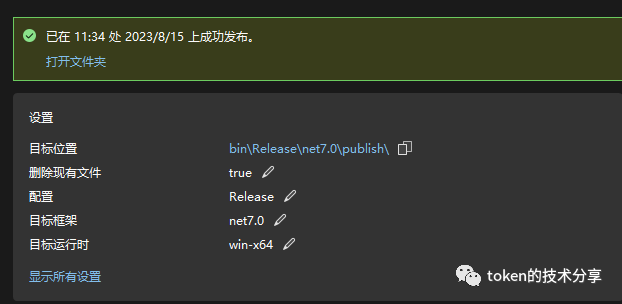
右键发布:
创建控制台LiteDB.Launch项目。
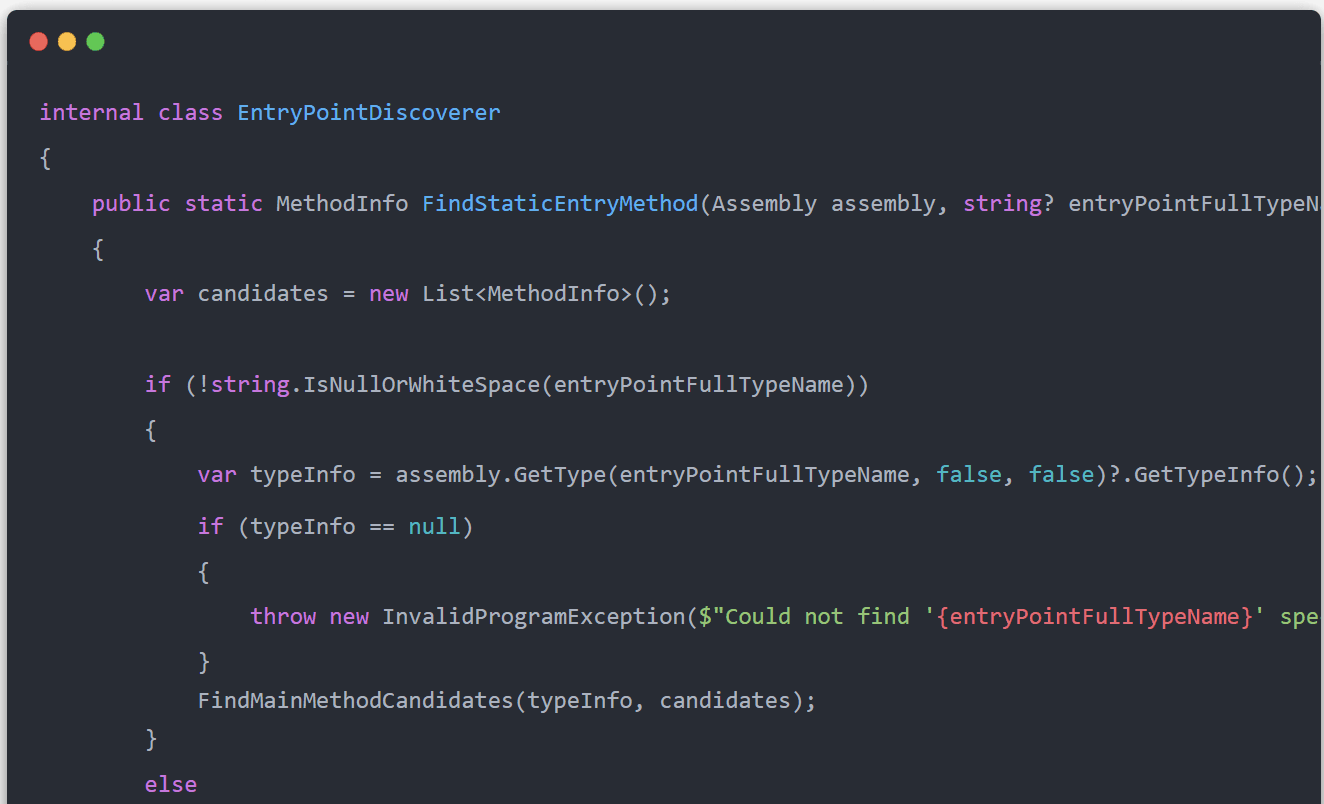
EntryPointDiscoverer.cs 用于寻找执行方法。
internal class EntryPointDiscoverer
{
    public static MethodInfo FindStaticEntryMethod(Assembly assembly, string? entryPointFullTypeName = null)
    {
        var candidates = new List<MethodInfo>();

        if (!string.IsNullOrWhiteSpace(entryPointFullTypeName))
        {
            var typeInfo = assembly.GetType(entryPointFullTypeName, false, false)?.GetTypeInfo();
            if (typeInfo == null)
            {
                throw new InvalidProgramException($"Could not find '{entryPointFullTypeName}' specified for Main method. See <StartupObject> project property.");
            }
            FindMainMethodCandidates(typeInfo, candidates);
        }
        else
        {
            foreach (var type in assembly
                         .DefinedTypes
                         .Where(t => t.IsClass)
                         .Where(t => t.GetCustomAttribute<CompilerGeneratedAttribute>() is null))
            {
                FindMainMethodCandidates(type, candidates);
            }
        }

        string MainMethodFullName()
        {
            return string.IsNullOrWhiteSpace(entryPointFullTypeName) ? "Main" : $"{entryPointFullTypeName}.Main";
        }

        if (candidates.Count > 1)
        {
            throw new AmbiguousMatchException(
                $"Ambiguous entry point. Found multiple static functions named '{MainMethodFullName()}'. Could not identify which method is the main entry point for this function.");
        }

        if (candidates.Count == 0)
        {
            throw new InvalidProgramException(
                $"Could not find a static entry point '{MainMethodFullName()}'.");
        }

        return candidates[0];
    }

    private static void FindMainMethodCandidates(TypeInfo type, List<MethodInfo> candidates)
    {
        foreach (var method in type
                     .GetMethods(BindingFlags.Static |
                                 BindingFlags.Public |
                                 BindingFlags.NonPublic)
                     .Where(m =>
                         string.Equals("Main", m.Name, StringComparison.OrdinalIgnoreCase)))
        {
            if (method.ReturnType == typeof(void)
                || method.ReturnType == typeof(int)
                || method.ReturnType == typeof(Task)
                || method.ReturnType == typeof(Task<int>))
            {
                candidates.Add(method);
            }
        }
    }
}
然后打开Program.cs文件,请注意修改 SaveDb 的参数为自己项目打包的地址
// 用于打包指定程序。
SaveDb(@"E:\Project\LiteDB-Application\LiteDB.Service\bin\Release\net7.0\publish");

// 打开db
var db = new LiteDatabase("Launch.db");

// 打开表。
var files = db.GetCollection<FileAssembly>("files");

// 接管未找到的程序集处理
AppDomain.CurrentDomain.AssemblyResolve += (sender, eventArgs) =>
{
    try
    {
        var name = eventArgs.Name.Split(",")[0];
        if (!name.EndsWith(".dll"))
        {
            name += ".dll";
        }

        var file = files.FindOne(x => x.Name == name);

        return file != null ? Assembly.Load(file.Bytes) : default;
    }
    catch (Exception)
    {
        return default;
    }
};

// 启动程序。
StartServer("LiteDB.Service", new string[] { });

Console.ReadKey();

void StartServer(string assemblyName, string[] args)
{
    var value = files!.FindOne(x => x.Name == assemblyName + ".dll");
    var assembly = Assembly.Load(value!.Bytes);

    var entryPoint = EntryPointDiscoverer.FindStaticEntryMethod(assembly);

    try
    {
        var parameters = entryPoint.GetParameters();
        if (parameters.Length != 0)
        {
            var parameterValues = parameters.Select(p =>
                    p.ParameterType.IsValueType ? Activator.CreateInstance(p.ParameterType) : null)
                .ToArray();
            entryPoint.Invoke(null, parameterValues);
        }
        else
        {
            entryPoint.Invoke(null, null);
        }
    }
    catch (Exception e)
    {

    }
}


// 扫描指定目录下所有文件和子目录,保存到LiteDB数据库中。
void SaveDb(string path)
{
    var files = ScanDirectory(path);
    using var db = new LiteDatabase("Launch.db");
    var col = db.GetCollection<FileAssembly>("files");
    col.InsertBulk(files);
}

// 实现一个方法,扫描指定目录下所有文件和子目录,返回一个集合。
List<FileAssembly> ScanDirectory(string path)
{
    var files = new List<FileAssembly>();
    var dir = new DirectoryInfo(path);
    var fileInfos = dir.GetFiles("*", SearchOption.AllDirectories);
    foreach (var fileInfo in fileInfos)
    {
        var file = new FileAssembly
        {
            Name = fileInfo.Name,
            Bytes = File.ReadAllBytes(fileInfo.FullName)
        };
        files.Add(file);
    }

    return files;
}

class FileAssembly
{
    /// <summary>
    /// 文件名
    /// </summary>
    public string Name { get; set; }

    /// <summary>
    /// 文件的内容
    /// </summary>
    public byte[] Bytes { get; set; }
}
点击LiteDB.Launch项目文件,添加 LiteDB 依赖,并且修改 SDK 为Microsoft.NET.Sdk.Web
<Project Sdk="Microsoft.NET.Sdk.Web">

    <PropertyGroup>
        <OutputType>Exe</OutputType>
        <TargetFramework>net7.0</TargetFramework>
        <ImplicitUsings>enable</ImplicitUsings>
        <Nullable>enable</Nullable>
    </PropertyGroup>

    <ItemGroup>
      <PackageReference Include="LiteDB" Version="5.0.17" />
    </ItemGroup>

</Project>
在启动项目的时候先将LiteDB.Service发布一下。然后修改SaveDb参数为发布的目录(会自动扫描所有文件打包到 LiteDB 的文件中。)
然后启动项目;
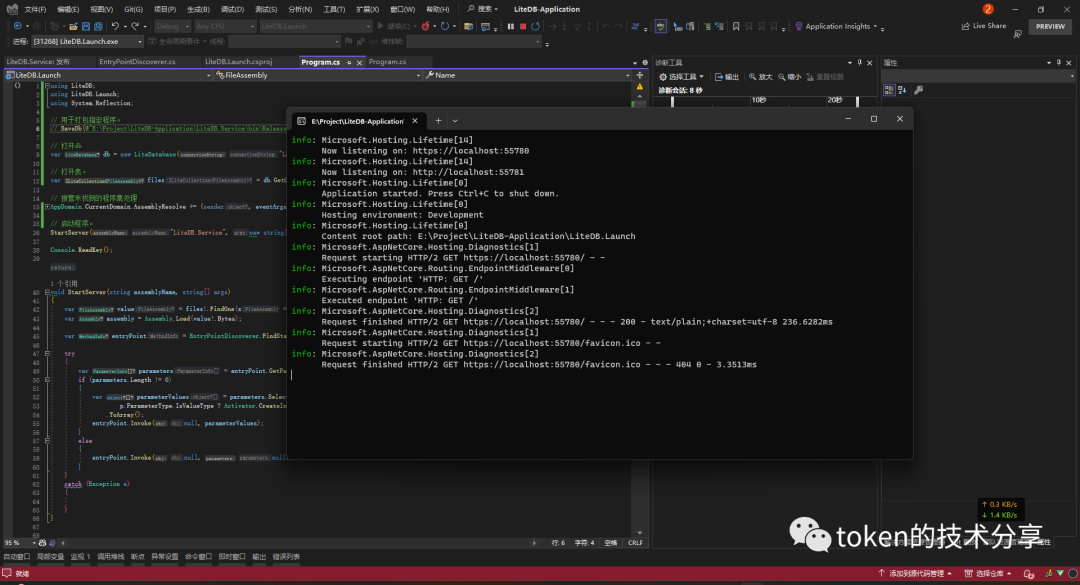
当我们启动了LiteDB.Launch以后在StartServer方法里面就会打开创建的 LiteDB 文件中搜索到指定的启动程序集。
然后在AppDomain.CurrentDomain.AssemblyResolve中会将启动程序集缺少的程序集加载到域中。
AppDomain.CurrentDomain.AssemblyResolve会在未找到依赖的时候触发的一个事件。
在存储到 LiteDB 的时候可以对于存储的内容进行加密,然后在AppDomain.CurrentDomain.AssemblyResolve触发的时候将读取 LiteDB 的文件的内容的时候进行解密。
结尾
来自 token 的分享
qq 技术交流群:737776595