

大家好,我是沙漠尽头的狼。
本文首发于Dotnet9,介绍使用Lib.Harmony库拦截第三方.NET库方法,达到不修改其源码并能实现修改方法逻辑、预期行为的效果,并且不限于只拦截public访问修饰的类及方法,行文目录:
- 什么是方法拦截?
- 示例程序拦截
- 非public方法怎么拦截?
- 总结
1. 什么是方法拦截?
方法拦截是指在方法被调用之前或之后,通过插入自定义的代码来修改方法的行为。通过方法拦截,开发人员可以在不修改原始代码的情况下,对方法的输入参数进行验证、修改方法的返回值、记录方法的调用日志等操作。
本文使用Lib.Harmony库实现第三方库方法的拦截,关于该库站长写过快学会这个技能-.NET API拦截技法一文,大家可以再看看,但该篇文章未介绍非public类及方法如何拦截,本文会有所补充反过来 。
2. 示例程序拦截
2.1. 编写取数字段落的程序
创建一个.NET类库工程,比如叫TestDll,添加工具类TestTool:
namespace TestDll;

public class TestTool
{
    /// <summary>
    /// 带数字的优美段落
    /// </summary>
    private readonly List<string> _sentences = new()
    {
        "一,是孤独的象征,寂寞的代言人, 它独自站在诗句的起点,引人遐想。",
        "二,是相对的存在,对立的伴侣, 它们如影随形,互相依存。",
        "三,是完美的数字,三角的稳定, 它给诗歌带来了和谐的节奏。",
        "四,是平衡的象征,四季的轮回, 它让诗歌的结构更加坚实。",
        "五,是生机勃勃的数字,五彩斑斓的花朵, 它们在诗歌中绽放出美丽的画面。 ",
        "六,是平凡的数字,六边形的形状, 它们给诗歌带来了一种稳定的感觉。",
        "七,是神秘的数字,七色的虹霓, 它们在诗歌中散发出神奇的光芒。",
        "八,是无限的数字,八方的宇宙, 它们让诗歌的想象力无限延伸。",
        "九,是完美的数字,九曲的江河, 它们给诗歌带来了一种流动的美感。 ",
        "十,是圆满的数字,十全十美的象征, 它们让诗歌的结尾更加完美。"
    };

    /// <summary>
    /// 取对应数字的段落
    /// </summary>
    /// <param name="number"></param>
    /// <returns></returns>
    public string GetNumberSentence(int number)
    {
        var mo = number % _sentences.Count;

        // 个位为0,取最后一
        if (mo == 0)
        {
            mo = 10;
        }

        if (mo == 6)
        {
            mo = 1;
        }

        var sentencesIndex = mo - 1;
        return _sentences[sentencesIndex];
    }
}
上面的方法GetNumberSentence逻辑:传入一个整型number参数,除10(集合_sentences项数)取模,返回10以内的数字美文段落,其中如果模为6会取数字1的段落(这是为了验证拦截逻辑设计添加的)。
下面是写的一个AvaloniaUI程序测试界面,UI不是本文重点,这里就直接贴动图和代码截图了,文末也有源码链接:
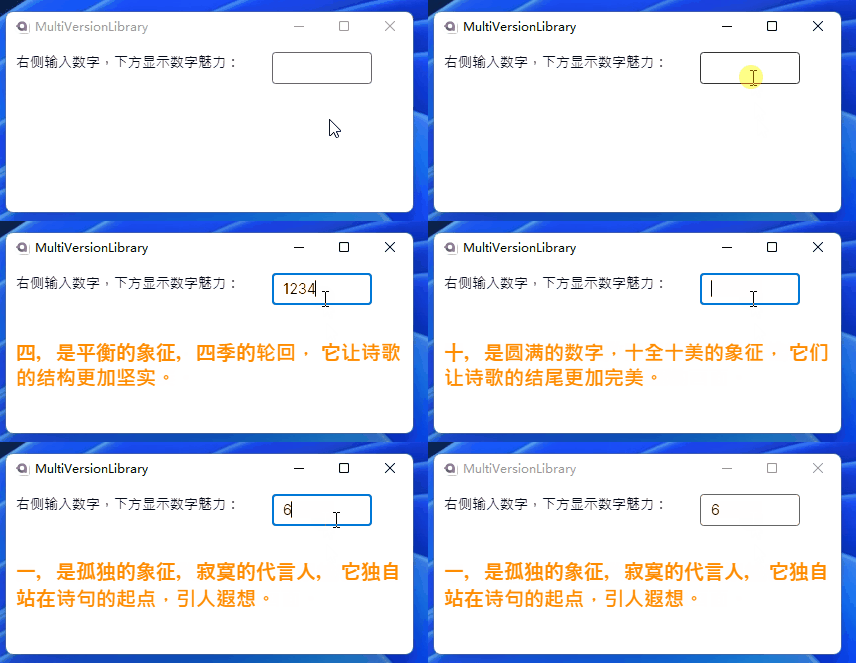
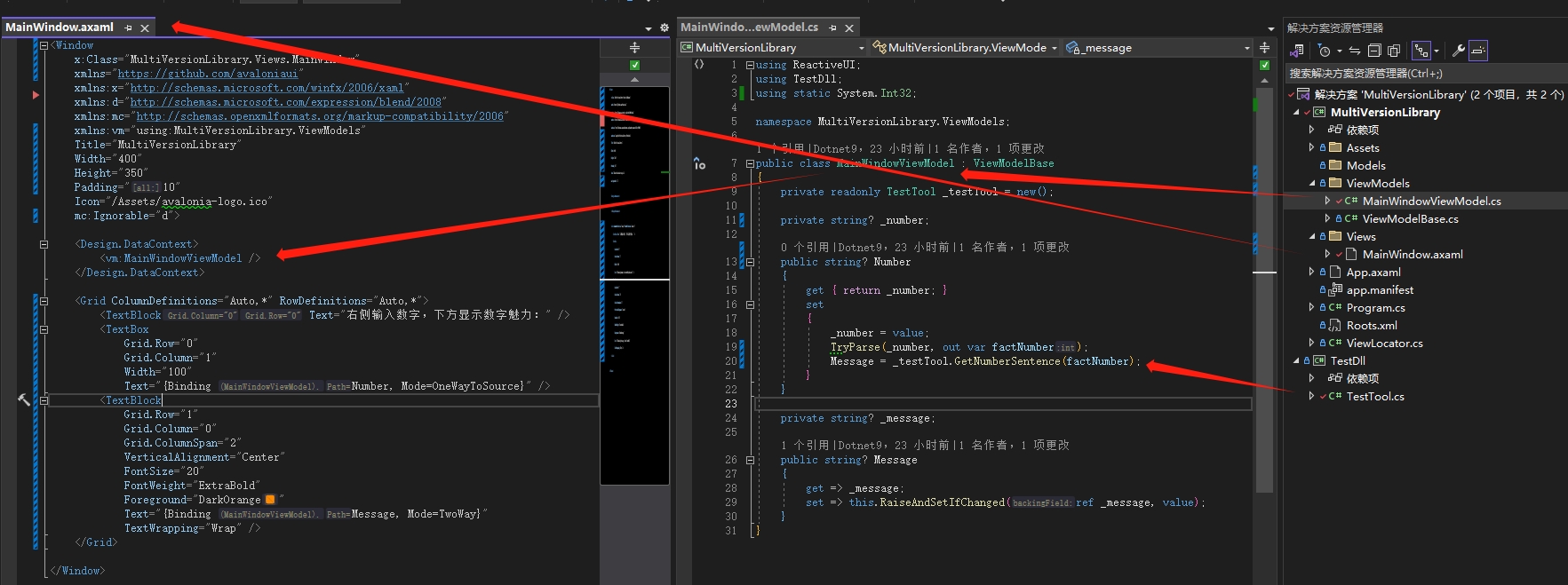
2.2. 为什么个位数字为6时,总是显示数字1的段落呢?
分析上面的代码,我们想把mo == 6时让mo = 1逻辑去掉,除了使用dnSpy这些反编译工具修改代码,我们还可以使用Lib.Harmony(快学会这个技能-.NET API拦截技法 - Dotnet9)拦截GetNumberSentence方法。
- 安装
Lib.Harmony包
<PackageReference Include="Lib.Harmony" Version="2.3.0-prerelease.2" />
- 编写拦截替换类
参考快学会这个技能-.NET API拦截技法 - Dotnet9添加如下拦截替换类:
- 在拦截类上注册需要拦截的原类类型、原方法名和参数数据类型
- 可以先将原方法内代码复制到拦截替换方法
Prefix内,对于原类中的属性、字段可通过反射获取(比如_sentences集合) - 将
mo == 6的代码注释
using HarmonyLib;
using System.Reflection;
using TestDll;

namespace MultiVersionLibrary;

/// <summary>
/// HarmonyPatch特性关联拦截的类及方法
/// </summary>
[HarmonyPatch(typeof(TestTool))]
[HarmonyPatch(nameof(TestTool.GetNumberSentence))]
[HarmonyPatch(new Type[] { typeof(int) })]
internal class HookGetNumberSentence
{
    /// <summary>
    /// GetNumberSentence拦截替换方法
    /// </summary>
    /// <param name="__instance">拦截的TestTool实例</param>
    /// <param name="number">GetNumberSentence方法同名参数定义,修改它达到方法参数篡改</param>
    /// <param name="__result">GetNumberSentence方法返回值,修改它达到方法值伪造</param>
    /// <returns></returns>
    public static bool Prefix(ref object __instance, int number, ref string __result)
    {
        try
        {
            //将原方法逻辑全部复制,然后做部分修改

            //1、_sentences是拦截类TestTool的私胡字段,我们通过反射获取值
            var sentences =
                __instance.GetType().GetField("_sentences", BindingFlags.NonPublic | BindingFlags.Instance)
                    ?.GetValue(__instance) as List<string>;
            if (sentences?.Any() != true)
            {
                __result = "啊,没有优美句子吗?";
                return true;
            }

            var mo = number % sentences.Count;

            // 个位为0,取最后一
            if (mo == 0)
            {
                mo = 10;
            }

            // 2、注释我们认为有歧义的代码
            //if (mo == 6)
            //{
            //    mo = 1;
            //}

            var sentencesIndex = mo - 1;
            __result = sentences[sentencesIndex];

            return false;
        }
        catch (Exception ex)
        {
            return true;
        }
    }
}
别忘了在Program或App.xaml初始方法内注册自动拦截类方法:
var harmony = new Harmony("https://dotnet9.com");
harmony.PatchAll(Assembly.GetExecutingAssembly());
重新运行主程序,输入数字6时正常显示数字6对应的段落了:
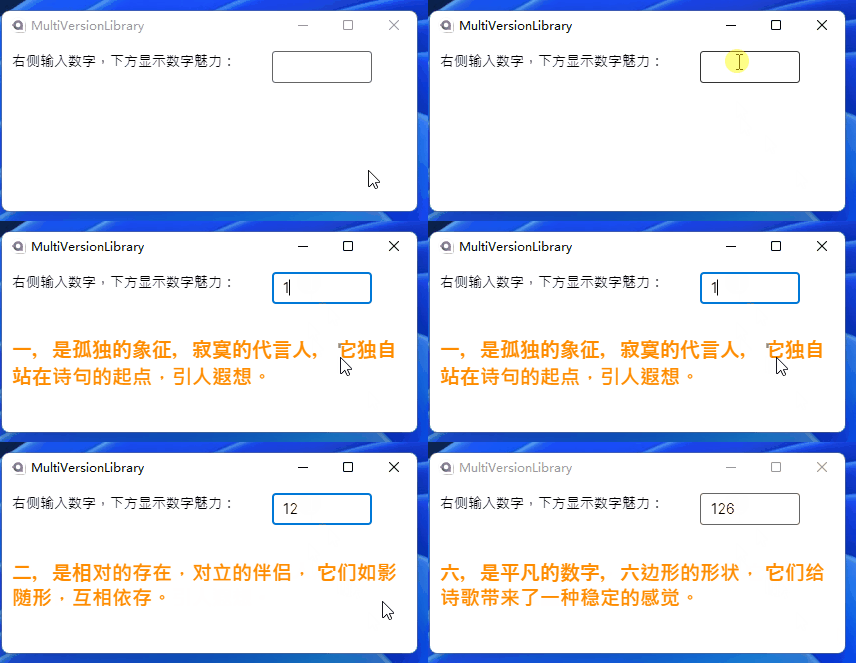
这样就达到不修改第三库源码的情况实现结果篡改了,站长使用.NET 8拦截会有异常,后改为 .NET 6 得以正常运行,异常信息如下,可能是Lib.Harmony还不支持.NET 8吧:
HarmonyLib.HarmonyException:“Patching exception in method System.String TestDll.TestTool::GetNumberSentence(System.Int32 number)”
TypeInitializationException: The type initializer for 'MonoMod.Utils.DMDEmitDynamicMethodGenerator' threw an exception.
InvalidOperationException: Cannot find returnType fieeld on DynamicMethod
3. 非public方法怎么拦截?
3.1. 修改数字段落获取方法
还是修改TestTool类,另外增加GetNumberSentence2方法,在方法中添加一个数字验证操作mo = new CalNumber().GetValidNumber(mo);,方法定义如下:
/// <summary>
/// 取对应数字的段落
/// </summary>
/// <param name="number"></param>
/// <returns></returns>
public string GetNumberSentence2(int number)
{
    var mo = number % _sentences.Count;

    // 个位为0,取最后一
    if (mo == 0)
    {
        mo = 10;
    }

    // 新增数字验证方法
    mo = new CalNumber().GetValidNumber(mo);

    var sentencesIndex = mo - 1;
    return _sentences[sentencesIndex];
}
验证方法定义如下:
CalNumber类和GetValidNumber方法用internal声明,意为类或方法只能在当前工程内使用
internal class CalNumber
{
    internal int GetValidNumber(int number)
    {
        // 这里可以加一些复杂的算法代码
        if (number == 6)
        {
            number = 1;
        }

        return number;
    }
}
并在主工程调用数字获取段落方法处改为:
public string? Number
{
    get { return _number; }
    set
    {
        _number = value;
        TryParse(_number, out var factNumber);

        // 换方法2了
        Message = _testTool.GetNumberSentence2(factNumber);
    }
}
输入6时又返回1的段落了:
问题来了:internal方法怎么拦截?
我们不直接注释代码mo = new CalNumber().GetValidNumber(mo);,万一验证方法非常重要,我们只是需要修改其中部分逻辑,总体原逻辑不应该改变。
3.2. internal方法怎么拦截?
新增拦截类HookGetValidNumber,现在不能再在类上添加特性了([HarmonyPatch(typeof(CalNumber))]),因为CalNumber不是public访问修饰,跨工程无法直接使用,语法不支持:
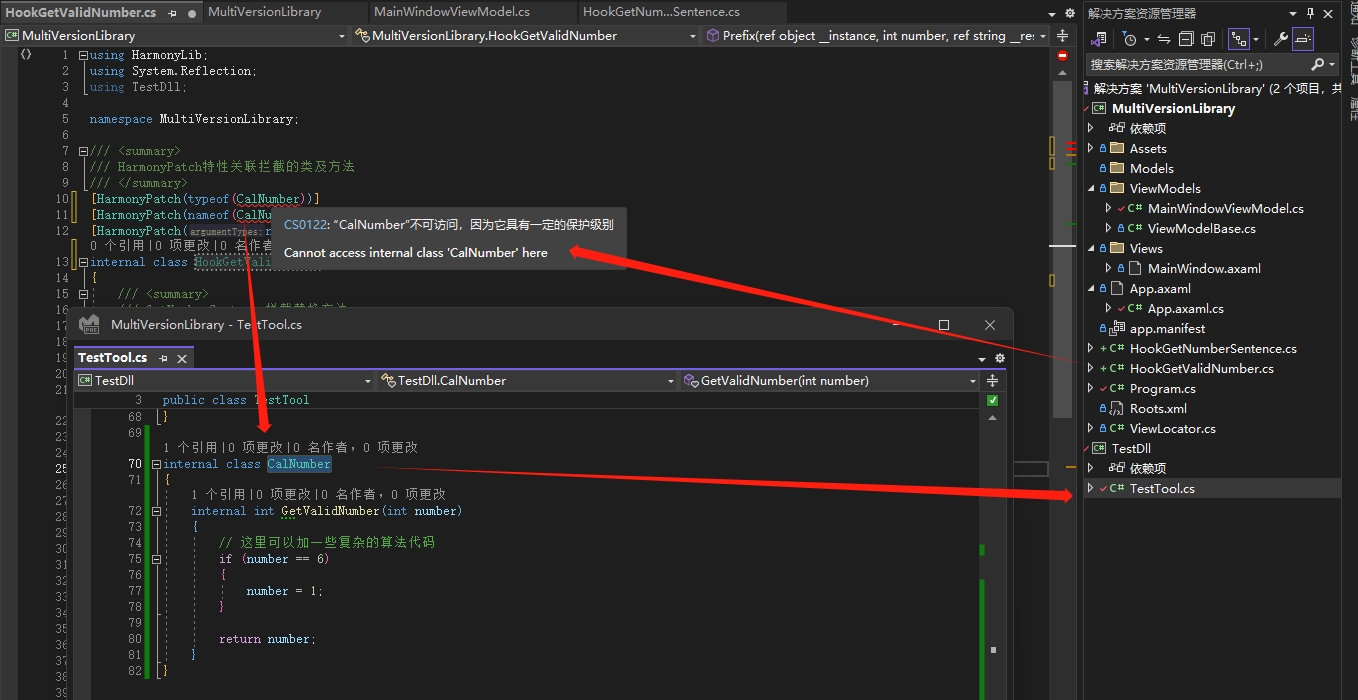
特性用不上,那就手工注册需要拦截的方法,这是本文的重点,代码在下面,简单提一下:
- 手工注册代码和自动注册声明特性类似,只是换个写法;
- 拦截替换方法需要使用
HarmonyMethod方法包装; harmony.Patch(hookMethod, replaceHarmonyMethod);用于关联被拦截方法与替换方法
/// <summary>
/// 手工注册关联被拦截方法与替换方法
/// </summary>
public static void StartHook()
{
    var harmony = new Harmony("https://dotnet9.com");
    var hookClassType = typeof(TestTool).Assembly.GetType("TestDll.CalNumber");
    var hookMethod = hookClassType!.GetMethod("GetValidNumber", BindingFlags.NonPublic | BindingFlags.Instance,
        new[] { typeof(int) });
    var replaceMethod = typeof(HookGetValidNumber).GetMethod(nameof(Prefix));
    var replaceHarmonyMethod = new HarmonyMethod(replaceMethod);
    harmony.Patch(hookMethod, replaceHarmonyMethod);
}
替换方法定义如下:
Prefix方法命名这里不加限制,只要和上面手工注册(var replaceMethod = typeof(HookGetValidNumber).GetMethod(nameof(Prefix));)相同即可:- 数字等于6,修改伪造结果为8
/// <summary>
/// GetNumberSentence拦截替换方法
/// </summary>
/// <param name="__instance">拦截的TestTool实例</param>
/// <param name="number">GetNumberSentence方法同名参数定义,修改它达到方法参数篡改</param>
/// <param name="__result">GetNumberSentence方法返回值,修改它达到方法值伪造</param>
/// <returns></returns>
public static bool Prefix(ref object __instance, int number, ref int __result)
{
    //将原方法逻辑全部复制,然后做部分修改

    // 这里可以加一些复杂的算法代码
    if (number == 6)
    {
        number = 8;
    }

    __result = number;

    return false;
}
最后在原自动注册代码下,再加一行手工注册代码就OK,打完收工:
// 1、自动注册拦截类:拦截类上添加被拦截类和方法特性
var harmony = new Harmony("https://dotnet9.com");
harmony.PatchAll(Assembly.GetExecutingAssembly());

// 2、自动注册拦截类,构造被拦截类和方法信息进行拦截
HookGetValidNumber.StartHook();
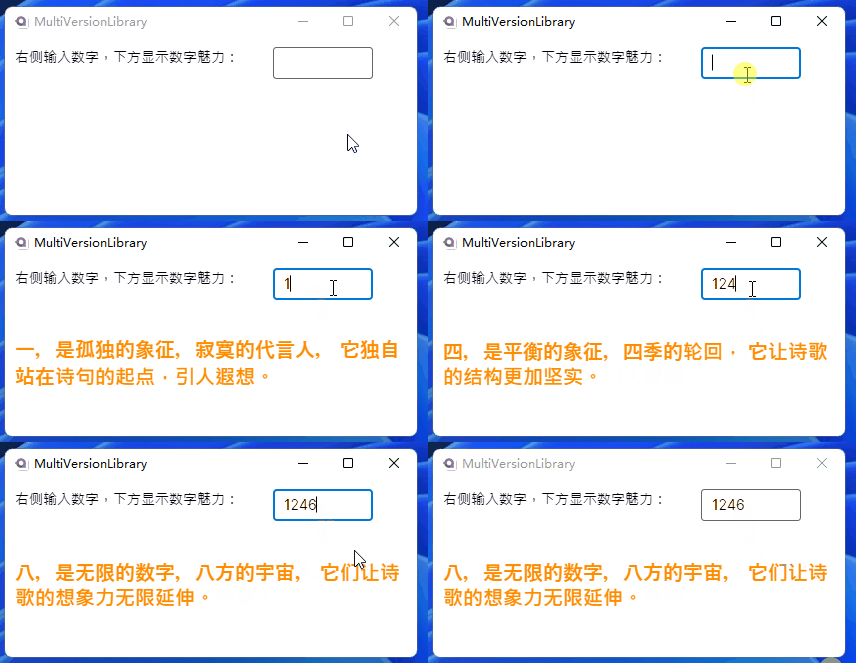
运行效果如下,输入6显示数字8段落:
4. 总结
- 技术交流加群请添加站长微信号:codewf
- 文中示例代码:MultiVersionLibrary
使用Lib.Harmony库拦截注册有两种方式的用处如下:
- 自动注册:
- 通过在拦截类上使用特性关联被拦截类和方法定义,可以实现自动注册拦截逻辑。这种方式适用于需要拦截的类和方法比较多的情况,可以减少手动注册的工作量,提高开发效率。
- 自动注册通常只能关联public类或方法,因为IDE会根据代码的可见性进行过滤和提示。
- 手工注册:
- 通过代码构造被拦截类和方法定义进行手工注册,可以更加灵活地控制拦截逻辑。这种方式适用于需要对拦截逻辑进行定制化处理的情况,可以根据具体需求选择需要拦截的类和方法,并对拦截逻辑进行精细化配置。
- 手工注册更加灵活,可以拦截包括internal在内的各种类和方法。手工注册可以通过编写代码来实现对非public类和方法的关联,但需要注意的是,这样做可能会增加代码的复杂性和维护成本。