
About Creating WPF Tutorial Videos for Being Paid by Microsoft

About Creating WPF Tutorial Videos for Being Paid by Microsoft

Diverse perspectives enrich the technical community. However, disrespectful expressions and statements based on unsubstantiated information are not conducive to constructive dialogue.

Last updated 10/15/2024 10:17 PM
小李趣味多
10 min read
Category
WPF
Tags
.NET WPF

This article is reproduced from Bilibili user Li Xiao Qu Wei Duo, original link:

Below is the original text


Hello everyone, I'm Vicky.

Recently, a user with the nickname Dre****ine left several comments under my WPF tutorial video. Although most of the conversation took place with a few other users, I believe diverse viewpoints are important for technological development. Therefore, I would also like to share my thoughts on this.

Point 1: "Making this WPF tutorial 10 years ago would have had some meaning..."

Technology trends constantly cycle. Starting from desktop, trends moved to the web, then mobile, recently through AI, and now back to desktop. This change will continue in the future, as technology always evolves and adapts.

WPF has grown steadily in the Windows desktop environment over many years. During this process, it has left behind many development methodologies, frameworks, and libraries, and has also spawned various XAML-based platforms. For example: Xamarin, .NET Core, UWP, WinUI 3, MAUI, Uno Platform, Avalonia UI, OpenSilver, and more.

Some may downplay the significance of WPF, but it remains an important platform still used by many developers. Especially in desktop application development requiring complex UI and rich user experiences, WPF still holds high value. In the future, WPF will continue to be studied and researched, with new technologies and platforms building upon this foundation.

Point 2: "Persuading others not to go astray."

Technology choices need to consider multiple factors such as project requirements, team capabilities, and long-term goals. WPF is still widely used in many fields, especially in enterprise environments for developing complex desktop applications, where it performs excellently.

From this perspective, learning WPF technology is not a wrong choice. If you truly want to advise viewers not to go astray, you should provide genuinely reasonable arguments and evidence supporting those arguments. Otherwise, it will only become unfounded criticism, making constructive dialogue difficult.

Point 3: "Standing on the shoulders of giants, I can do well, but unfortunately there are no giants in the WPF track."

WPF not only continues to receive support but is also evolving alongside .NET Core. Microsoft is continuously developing WPF. Recently, in .NET 9.0, it has been updated according to the latest design trends.

Furthermore, the above claim is not factual. Many developers both domestically and internationally have contributed to WPF. It is precisely because of their efforts that WPF can continue to develop. Just because you are unaware does not mean they do not exist. WPF's architecture and development methods remain solid and have inspired many other platforms. It is truly unfortunate that you hold such thoughts.

Point 4: "Even Microsoft internally writing a small tool probably wouldn't use this..."

Microsoft uses various technology stacks, including WPF, to develop internal tools and applications. Many UI parts of Visual Studio are built with WPF. Microsoft also continues to list WPF technology stack as an important recruitment project, reflecting its importance and practicality.

Point 5: "And the animation frame drops in WPF, the XAML design is too old, triggers, converters, partial binding logic. The concepts are from the 2005 development approach."

WPF's XAML, triggers, converters, and bindings have inspired many subsequent platforms. This proves that even though WPF's architecture design and development methods have existed for a long time, they are still excellent. Not everything old is bad.

WPF technology will continue to serve as a solid foundation for various XAML-based platform technologies. Your thoughts are not the whole picture. It is also regrettable to believe that old technologies have no learning value simply because they are outdated, and to try to persuade others of this.

Even old languages and platforms remain important, retaining their value over time.

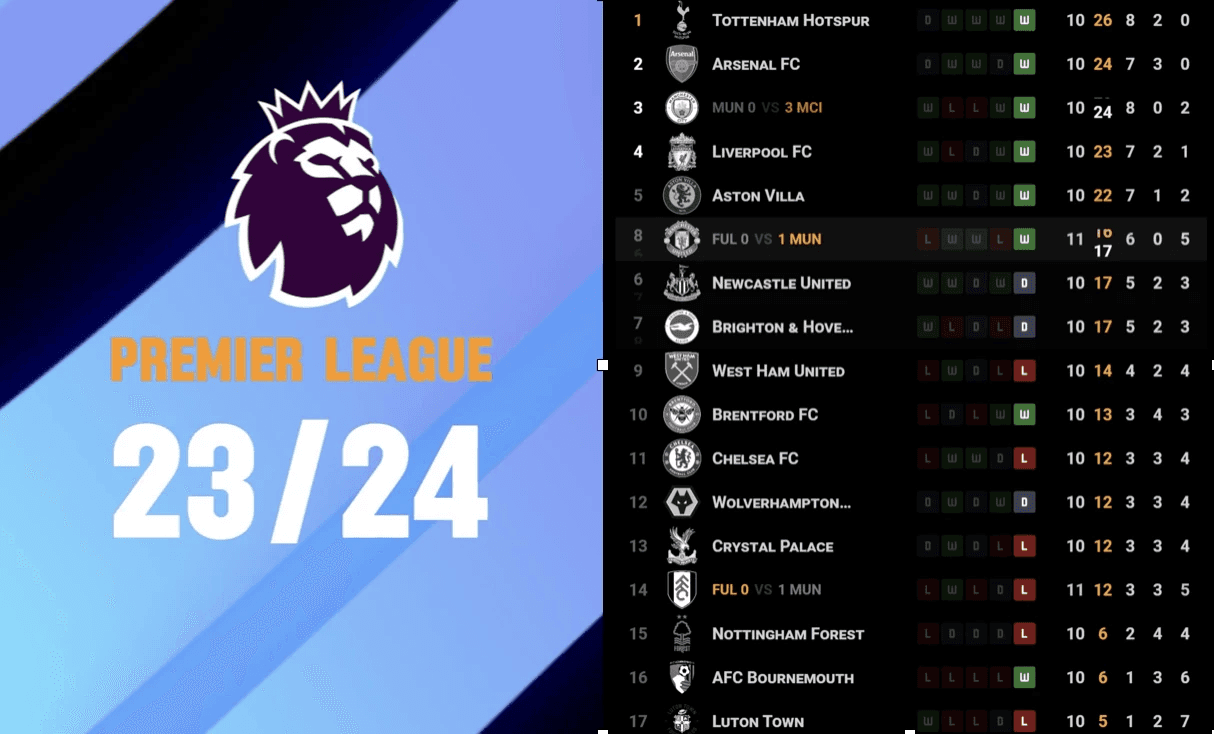
Then you can also refer to the animation video of the Premier League rankings made with WPF on our channel.

https://www.bilibili.com/video/BV1w4421X7v3

I hope you understand that depending on how it is used, WPF can also exhibit excellent performance. WPF's animations are particularly good at using objects to create very complex and interesting movements. The 7 instructional videos we have released, as well as future updates, will continue to build on these techniques.

Of course, newer platforms have better animation performance. But the emergence of new platforms does not mean the value of existing platforms disappears. If a new platform emerges after Flutter, will Flutter's value disappear? Not at all. Flutter, like other platforms, will inspire new platforms and continue to play an important role in technological development.

Past platforms like Flash, Flex, Silverlight, etc., which no longer exist, have all made valuable contributions to the next generation. All platforms will do the same, contributing to technological development.

Point 7: "Finding a job is relatively few, but probably not a big problem."

The total number of jobs may vary with current trends. But the total number of jobs is not equivalent to job quality. There are sufficient job opportunities in every field; the key lies in what level you seek a job.

For beginners, choosing a popular field with many job opportunities may be common. But not everyone needs to choose a popular field or platform.

Regarding WPF, because it is very convenient to extend technology to various XAML-based platforms. Especially extending to cross-platform solutions like MAUI, Uno Platform, Avalonia UI, OpenSilver, etc., the future for existing WPF developers will be even more solid.

Point 8: "Hello, this content creator gets paid (by Microsoft), I don't receive money (remove the parentheses)"

From beginning to end, I have never received any financial support from Microsoft. I don't know on what basis you made such an assertion.

You say you wrote these comments to dissuade others from going astray, yet you post such false content on a public platform without any provable factual basis. Such behavior is truly regrettable!

Point 9: "Not to mention skill level, I promoted WPF from 2015 to 2019 and taught others WPF. Back then it was indeed worth learning. But now telling people to learn it, isn't that just getting paid to do a job?"

If you taught WPF in the past, I think you should understand its value and potential. Even as time passes, the fundamental principles and concepts of technology remain valid, and the same applies to WPF. Therefore, learning WPF now still holds sufficient value, depending on personal choices and goals.

So I find it hard to agree with your view that it's inappropriate to re-learn WPF now. WPF is still developing and is more mature than it was 10 years ago as you mentioned. With numerous excellent open-source projects, libraries, frameworks, and the development of .NET, WPF continues to grow.

Hence, I do not believe this video will lead anyone astray. But it is truly regrettable that you made such an unfounded claim.

Point 10: "How am I qualified to tell you what you should learn? I'm not even qualified to say whether this content creator is right or wrong."

This statement seems contradictory to your earlier remarks. You explicitly stated that you posted comments to prevent people from going astray and have been disparaging WPF. Yet your attitude is inconsistent throughout the conversation, which clearly does not contribute to constructive dialogue. Such an attitude is regrettable.

Point 11: "You agree with WPF, so you think what I said is wrong, and then you insist on humiliating me into saying something, only to criticize it. If you don't agree with what I said, there's naturally no need to communicate with me, because I don't want to try to convince you. Nor do I want to convince anyone."

You have shown disrespect toward this video and WPF, yet expect respect from others. Opinion exchange should be based on mutual respect. For constructive dialogue, a consistent attitude and respect for the other party are necessary.

Conclusion

I am not writing this article necessarily for the commenter to see. I am merely concerned that some people might be misled by these remarks, so I decided to write this article.

Diverse viewpoints enrich the technology community. However, disrespectful expressions and statements based on unverified information are not conducive to constructive dialogue.

I created this series of tutorials to share the advantages and potential of WPF with everyone. Technology choices depend on individual goals and circumstances.

As for me, I will continue to strive to provide more useful information and techniques, hoping we can together create a mutually growth-oriented developer community.

I always welcome your valuable opinions and feedback.

Thank you everyone!

Author: Li Xiao Qu Wei Duo https://www.bilibili.com/read/cv39399906/ Source: Bilibili


Below are selected comments from the original article by the site owner, please discuss rationally:

Keep Exploring

Related Reading

More Articles
Same category / Same tag 9/13/2025

Migration Series from WPF to Avalonia: Why I Must Migrate My WPF Application to Avalonia

In the past few years, our host computer software has mainly been developed using WPF and WinForm . These technologies work well on the Windows platform and have accompanied us from small-scale trial production to the current stage of large-scale delivery. However, with business development and changes in customer requirements, the single Windows technology stack has gradually become a hurdle we must overcome.

Continue Reading
Same category / Same tag 1/26/2025

Implementing Internationalization in WPF Using Custom XML Files

This article details the method of implementing internationalization in WPF applications using custom XML files, including installing the necessary NuGet packages, dynamically retrieving the language list, dynamically switching languages, using translated strings in code and XAML interfaces, and provides a source code link to help developers easily achieve internationalization in WPF applications.

Continue Reading
Same category / Same tag 5/7/2024

Self-developed Hot-pluggable WPF Plugin System (MSF)

The need for plug-in architecture mainly stems from the pursuit of flexibility in software architecture, especially when developing large, complex, or constantly evolving software systems. Pluginization enhances scalability, customizability, isolation, security, maintainability, modularity, ease of upgrade and update, and third-party development capabilities, thereby meeting ever-changing business requirements and technical challenges.

Continue Reading