
(5/30) Learning Blazor Together: Dependency Injection
The question is, how does Blazor know that WeatherForecastService can be invoked here?
The question is, how does Blazor know that WeatherForecastService can be invoked here?

Most Windows Forms applications I encounter have no or extremely low unit test coverage. And they are often difficult to maintain, with hundreds or even thousands of lines of code behind various Form classes in the project, but it doesn't have to be that way.
Since the author used ASP.NET Core API + Blazor Server initially, the demonstration will be based on Blazor Server. After researching Blazor WebAssembly, the insights will be supplemented later.
After downloading Visual Studio, first create a Blazor solution and establish a Blazor Server project inside it. You can choose the project location yourself. (Note: The new version of Visual Studio has separated the project templates for Blazor Server and Blazor WebAssembly, making it more intuitive.)
The author's understanding of websites consists of frontend, backend, and database. When a user presses a button or submits a form request on the browser page, it triggers a frontend event, packages the collected conditions, and sends them to the backend.
The author has been in the software industry for a short time, and has encountered three architectures

If you've been keeping up with the latest trends in the .NET world, then you must have heard of Blazor by now.

Create a Blazor TabControl component, with two target knowledge points.
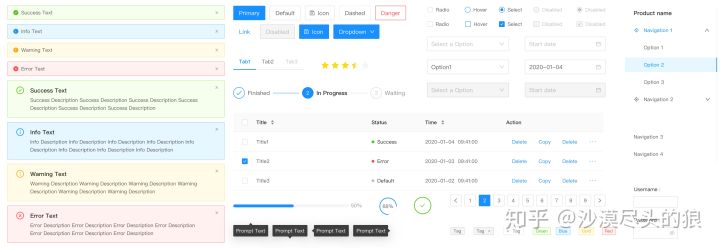
Following the previous introduction of the Bootstrap-style Blazor UI component library, today I will introduce another Blazor UI component library: an enterprise-level component library based on Ant Design and Blazor.